
How Does Color Correction Work, and Will It Fix My Hair?
Color correction does not erase the color on your head. It reads what is already there, removes or neutralizes the wrong parts, and builds a new shade in the right order.
Order is the whole job. Dye cannot lift dye. Bleach cannot fix a brassy tone on its own. A stronger formula stacked on a mistake usually makes a bigger mistake. At Sara Carden Hair, our private studio inside Marquise Salon Suites on Highway 71 in Austin, every color correction starts with a plan before anything gets mixed.
How does a color correction fix uneven or brassy hair?
Color correction works in three jobs, done in order. First we find out what is already in your hair. Second we lift, remove, or neutralize the pigment that is wrong. Third we build one even shade from roots to ends. It can fix uneven, brassy, or too-dark color, sometimes over more than one visit. If the hair is too weak for another lift, we say so.
Skip a job or swap the order, and the fix becomes a second problem. That is the part a quick redo misses.
Hair is not a blank page. Every color you have put on it is still in there, and each layer behaves differently. Box dye sits in the strand with no lift left in it. Old bleach has opened the cuticle on your ends. Your roots, grown in since the last color, are untouched. One head of hair can have three or four different histories at once.
Lightener does not take hair straight to blonde. It pulls dark pigment out in stages. Dark brown moves through red, then orange, then yellow, then pale yellow. Where we stop sets the tone you see. Stop at orange and you have orange.
Roots also lift faster than ends, because heat from your scalp speeds the reaction. That is one reason a single pass often leaves hot roots and tired ends.
So we think of correction as sorting, not painting. We sort the hair into zones, give each zone what it needs, and bring them to one color. A natural-looking blonde, the kind our clients ask for, comes from that sorting. Not from one big bowl.
Why does a correction start with a consultation and a strand test?
Nobody can read the history in your hair by looking at it, so we ask. Expect a real conversation before color touches anything. We want to know what has been on your hair over the last two years. Box dye, salon color, glosses, henna, a smoothing treatment, a home bleach kit: name all of it.
Some of those react badly with lightener, so naming them matters. A photo of your hair on a day it looked right helps too.
Then comes the strand test. We take a small hidden section and apply the formula we plan to use. We watch how fast it lifts and what tone it lands on. We also check how the strand feels wet and how much give it has.
That last check can change the plan. A healthy wet strand stretches a little and returns. A weak one stays stretched, or snaps. If the strand says no, the answer might be rest first, lift later.
Sara spent a decade in education and is a former Bumble and bumble Network Educator, so we explain the plan as we go. You should leave the consultation knowing how many visits to expect. You should also know what each one does, and what we will not promise.
What are the main ways we correct color?
Most corrections combine four moves: lifting, filling, toning, and blending. Which ones you need depends on where your hair is now and where you want it to land.
Lifting (going lighter)
Lifting removes pigment. Color remover pulls artificial dye out of the strand but cannot touch your natural pigment. Lightener lifts both. We choose between them based on what is in the hair.
Lifting suits dark box dye, heavy banding, and build-up on the ends. Lightened hair is more porous afterward. It needs a toner to hold the shade and more moisture to stay comfortable.
Filling and depositing (going darker)
Hair that has been lightened has lost the warm base that brown color depends on. Put a neutral or ash brown straight over it and the result goes flat, muddy, or even greenish. The warm base is gone.
So we fill first. We put warm pigment back (gold, copper, or red, depending on the shade). Then we deposit the final color over it. This suits blondes returning to brown, over-lightened hair, and patchy color. Darker shades tend to hold longer than blonde, but they still fade warm over time.
Toning and neutralizing (changing the tone)
Toning works on the color wheel. Blue cancels orange. Purple cancels yellow. Green cancels red. A toner deposits a sheer layer of the opposite shade so the unwanted tone stops showing.
The blonde in the photo below started with warm tendencies. The client wanted cooler, brighter, and dimensional. That is a common goal, and it follows the same order every time: light enough first, then the cool tone on top.
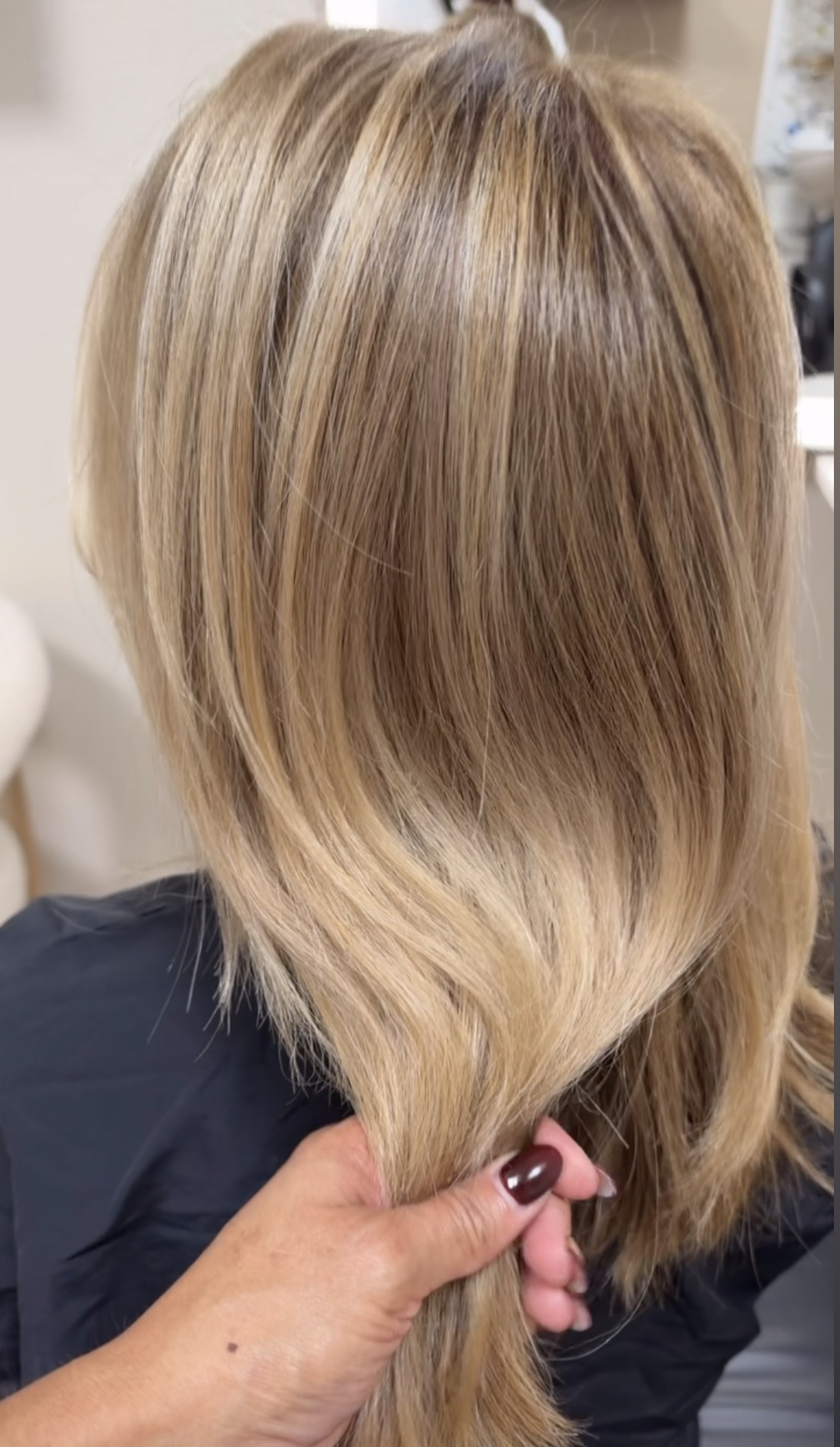
Here is the catch. A toner cannot lift. It only works when the hair is already light enough. If the roots are orange and the hair is not light enough yet, no toner will fix it. Toner fades in weeks, so a gloss visit keeps it fresh. We cover that in what a gloss and a toner do.
Blending (hand-painting to hide the line)
Not every correction means starting over. When the problem is a hard line or heavy stripes, hand-painted balayage or foilage can soften the contrast into dimension. Sara paints freehand, so the placement follows your hair and your part instead of a pattern.
Blending suits banding, grown-out dark color over lighter pieces, and hair with too much contrast. It grows out softer than a solid color. That is why many clients choose it when they want low maintenance.
What does a color correction appointment look like start to finish?
A color correction takes most of a day. Color corrections require a consultation and a full-day commitment. Bring snacks, a book, and plan to stay a while.
Here is the order we work in.
- Talk through your history. Tell us everything, including the home kit you would rather forget. By the end, we can say in one sentence what is in your hair.
- Test a strand. We try the formula on a hidden section first. That tells us how your hair lifts before we commit the whole head.
- Map the hair. We mark roots, mid-lengths, ends, and any bands. The result: each zone gets its own formula.
- Work the hard part first. We lift or remove in stages and check often. We watch tone and strand condition, not the clock.
- Fix the tone. We neutralize what is brassy or fill what is missing. Now the color is even before the final shade goes on.
- Set the color and plan what comes next. We gloss, rinse, and style. You leave knowing what the next visit does and when it should happen.
Why so long? Each stage needs the hair checked before the next one starts. Pushing a lift past what the strand can take is the one mistake no formula can undo. Nobody else is on the schedule while you are in the chair. No assistant rinses out a lift we were watching.
It is also why a natural-looking blonde is not made in two hours. Taking dark hair to a clean, pale base, toning it, and letting it recover often takes more than one visit. If you want the wider picture of what a rescue involves, read our guide to color correction in Austin.
We go deeper on this in How to Undo Hair Color You Hate Without Wrecking Your Hair.
Who is color correction for, and who should wait?
Color correction suits anyone whose color is uneven, the wrong tone, or the wrong depth. Here are the situations we see most:
- Dark box dye with lighter natural hair showing at the roots
- Stripes or bands where one color overlapped another
- Orange or yellow blonde that purple shampoo will not move
- A green cast, often after pool water or a mismatched toner
- Patchy results from home bleach
- A color that went too light and needs to come back to brown
- Hot roots, where the new growth lifted brighter than the lengths
Now the other half. Some hair should wait. If the strand test shows hair that snaps, or hair lightened several times in a row, another lift is the wrong move. We say so, and the plan changes. That could be a gloss, a trim, a stretch of rebuilding, or a darker shade that settles things for now.
That answer can cost us a service. It is still the right one. Often the real fix for brassy blonde is smaller than people fear. A toner or gloss may be enough, and our post on using purple shampoo correctly explains why more purple is not always the answer.
What do people get wrong about color correction?
Most mistakes come from trying to fix color in a hurry.
- Stacking box dye on a mistake. Dark dye over uneven color evens out the surface. It also locks in the depth and makes the next lift harder.
- Bleaching already-lightened ends again. Ends are the most porous part of the hair. A second pass there is how hair breaks.
- Using purple shampoo on orange. Purple cancels yellow, not orange.
- Expecting black box dye to reach cool blonde in one day. Lifting that much pigment safely takes stages.
- Waiting until the hair is snapping. Earlier is easier, and we have more options.
- Fixing it twice in one week with two different people. Each pass adds more history for the next stylist to decode.
A client described this in a Google review. Another salon left her hair in three tones after the first application. The redo left it two-toned and mostly bright yellow. She had chemical burns along her scalp line and an orange patch near her bangs. She booked a color correction consultation with us afterward.
Look at what went wrong there. Bleach that bleeds into a part or a hairline is a technique problem, not a hair problem. Clean sectioning and a protected scalp line matter as much as the formula. That is why our consultations come before the bowl.
How do you keep a corrected color looking right?
A corrected color holds as long as your aftercare matches what the hair has been through. Lightened and recolored hair is more porous, so small habits matter more.
Wash with cooler water and wash less often. Cool water keeps the cuticle flatter, so tone stays put. We carry Evo Hair, which has no sulfates and no parabens, along with Amika, Aluram, and Shibui. Which one fits depends on your hair, and we pick it with you at the end of the appointment. We wrote up how Aluram works on blonde balayage if blonde is your goal.
Tap water matters here too. Minerals in Hill Country water can dull blonde and pull it warm over time. We cover that pattern in why blonde fades fast in Driftwood. A gloss between visits resets the tone before it drifts far.
We build color to look right on day one and on day five. Not only on the day you leave the studio. You can see the color work we post on our Instagram.
What if bringing a color correction to a new stylist feels awkward?
It is not awkward on our side. We have seen it all, and nobody here judges how the hair got where it is.
When you find a stylist you trust, you stick with them. We understand that. A correction is not a vote against anyone. Hair gets knocked off course by a home kit or a move. Sometimes a shade did not suit, or a formula stopped working. We ask for the history because the formula needs it, not to assign blame.
Bring what you can. Daylight photos of your hair and a photo of the color you want help most. Add the names of any products used and the date of your last color. Our post on how to prep for a consultation covers the rest. When you are ready, book a color correction consultation and we will start with the conversation.
Clients come to us from Austin, Bee Cave, Lakeway, and Dripping Springs. See the full list on our areas we serve page. Cost depends on length, density, starting color, and how many stages the plan needs. Check our service menu for current pricing.
Frequently Asked Questions
How long does a color correction take?
A color correction takes most of a day, with a consultation first. Bring snacks and a book, because we check the hair between every stage.
Can a color correction be done in one visit?
Yes, sometimes. Uneven color on lighter hair can often be fixed in one day. Dark box dye heading to a light blonde usually takes more than one visit so the hair can recover between lifts.
Will color correction damage my hair?
Yes, any lightening puts some stress on the strand, so we plan around it. If the strand test says your hair cannot take another lift, we tell you. Then we choose a gentler route.
Can you fix orange or brassy hair?
Yes, usually. If the hair is light enough, a blue-based toner or gloss may be all it needs. If it is not, we lift a little further first, then tone.
What is the difference between a color correction and a toner?
A toner changes the tone of hair that is already the right depth. A color correction can change the depth too, by lifting pigment, removing old dye, or filling in what is missing. Many corrections end with a toner, but the toner is the last step, not the whole job.
Does color correction work on curly hair?
Yes. Curly hair tends to be drier and more porous, so we plan the lift in sections and check the strand before we go further. Tell us what is in your routine, since leave-ins and oils can affect how color takes.
How should I prepare for a color correction appointment?
Gather your hair history before you arrive. Bring daylight photos of your current hair, a photo of your goal, and the names of products you have used. Eat first, and pack snacks and a book for the long day.
Book a Consultation
If your color is uneven, the wrong tone, or just not what you asked for, let's look at it together. We will tell you what will work, what will not, and why. Book your appointment with Sara Carden Hair for a one-on-one visit at our private studio in Austin. No double-booking. No assistants. Prefer the phone? Call (714) 356-9500, and follow along on Instagram for more color work.