
How Do You Know If Your Scalp Needs More Attention?
Your scalp needs more attention when it starts acting differently than it used to. Roots go flat by lunch. Your part feels tender when you pull your hair back. Color fades faster, and the shampoo you switched to last month hasn't fixed any of it. Those look like hair problems, but most of them start at the scalp.
Most people only check their scalp when something hurts. At Sara Carden Hair in Austin, we look at it before we pick up a brush. Our earlier post on why scalp health is the foundation of great hair covers the growth side. This one is about reading the signs your scalp sends before they turn into a hair problem.
How can I tell my scalp needs some help?
Your scalp needs more attention when something about it changes. Watch for roots that go greasy or flat faster, and an itch or tightness that keeps coming back. Flakes, tenderness, early color fade, and a film after washing count too. One sign alone is often a washing or product issue. Several together, or any that hurt, deserve a closer look.
We can't diagnose a scalp condition, and no stylist should pretend to. What we can do is tell you what we see: buildup, dryness, redness, tension, product sitting where it shouldn't. That covers most of what comes through the studio.
It helps to sort the signs into two groups. Surface signs show up in the mirror: oil, flakes, shine, a film. Sensation signs show up in how your head feels: itch, tightness, tenderness. Both count. The second group is the one people ignore longest.
Which signs show up most often?
Six signs come up again and again at the consultation chair. Any of them can be minor. Knowing which ones you have makes the next step clearer.
Roots that go greasy or flat faster than they used to
Oil is normal. A change in your oil is the signal. Say you washed every two days for years and now need to wash daily. Something shifted: your products, your routine, your water, or the scalp itself.
Dry shampoo, texture spray, and heavy styling cream stack up at the roots and hold oil there. The hair looks flat because the roots are coated. You don't have less hair. You have a film sitting between your hair and the air.
Hair that feels coated or heavy after you wash
If your hair feels waxy, stiff, or rough right out of the shower, you're feeling a film. Silicones, styling products, and minerals in the water all build one.
We see the film Hill Country water leaves, especially on lightened hair. The tell is simple. Hair that squeaks and feels dull after conditioning is usually carrying something it should have rinsed away.
An itch or tightness that keeps coming back
An occasional itch happens. An itch that returns within a day or two of washing is worth tracking. So is a tight feeling, like the skin on your head is a size too small.
Causes range from shampoo that wasn't rinsed out, to a new product, to dry skin, to something a doctor should name. We can help you narrow down the first three. We can't rule out the last. Write down what you changed in the past two weeks. That note is the most useful thing you can bring to us or to a doctor.
Flakes that don't go away
Flakes can be dry skin, product residue, or a condition that needs a medical answer. Small and dry is a different picture from larger and oily.
We look at where the flakes sit and how you've been washing, then tell you which way it leans. If it's persistent, we say so. We'd rather send you to a doctor than sell you a bottle.
A tender or red scalp after color, tight styles, or heat
Tenderness when you pull your hair into a ponytail is a message. So is redness after a service. Tell us, every time.
Lightener sits close to skin, and that's why we ask about your scalp before we mix anything. Tight ponytails, braids, and extension wefts that pull can leave a scalp sore for days. If it hurts, loosen the style.
Color that fades early or takes unevenly
Buildup sits between your color and your hair. Toner laid over a film fades fast, and roots can grab color differently from the lengths. You think the formula failed. Often the surface was the problem.
In the trade, a clarifying wash before toning is a common fix for this. If your blonde keeps pulling warm, read our post on blonde fading in Driftwood. The water part of that story applies across the Hill Country. Our guide to blonde maintenance in Austin covers the upkeep side.
Is it buildup, or something a doctor should see?
Buildup is something we can see and fix at the shampoo bowl. A skin condition is something a doctor diagnoses. Knowing which one you have saves you months of switching shampoos.
Three things look alike from the mirror, so here is how we tell them apart:
- Product and mineral buildup. Hair feels coated, looks dull, and goes flat at the root. It often shows up after weeks of dry shampoo or styling spray. A reset wash and a lighter routine usually clear it.
- A dry scalp. The skin feels tight, flakes are small and dry, and the itch is worst right after washing. Gentler washing and less hot water help.
- An oily scalp. Roots shine within a day, hair clings to the skin, and it looks thin because it's stuck together. Washing more often, with a thorough rinse, is the usual answer.
Some signs go straight to a doctor. Itching that doesn't settle after you change your routine. Patches, sores, or pain. A sudden change in shedding. A part that looks wider than it used to. A shampoo doesn't fix those, and we don't diagnose them.
We'll tell you that even when it means you don't book with us. You came in to feel better about your hair, and a wrong guess costs you time.
Why does your scalp matter before a color appointment?
Your scalp decides how safely and how evenly we can color your hair. Lightener on irritated or broken skin is a bad day, and no result is worth it.
So the consultation comes before the formula. We ask about tenderness, new products, and any color you've done at home. We look at the scalp line. If the skin is sore, we tell you to wait, even when you've been planning the appointment for weeks.
Technique matters too. Hand-painted balayage can start lightener away from the scalp line, which is part of why lived-in color suits a sensitive head. Foilage and full weave sit closer, so we plan those around how your scalp is doing that week.
Color corrections need the closest look
Color corrections are the longest appointments we do, and they require a consultation first. A recent correction came in with warm tendencies, and the client wanted cooler, brighter, and dimensional. A shift like that usually means lightener and toner close to the skin. So the scalp check comes first.
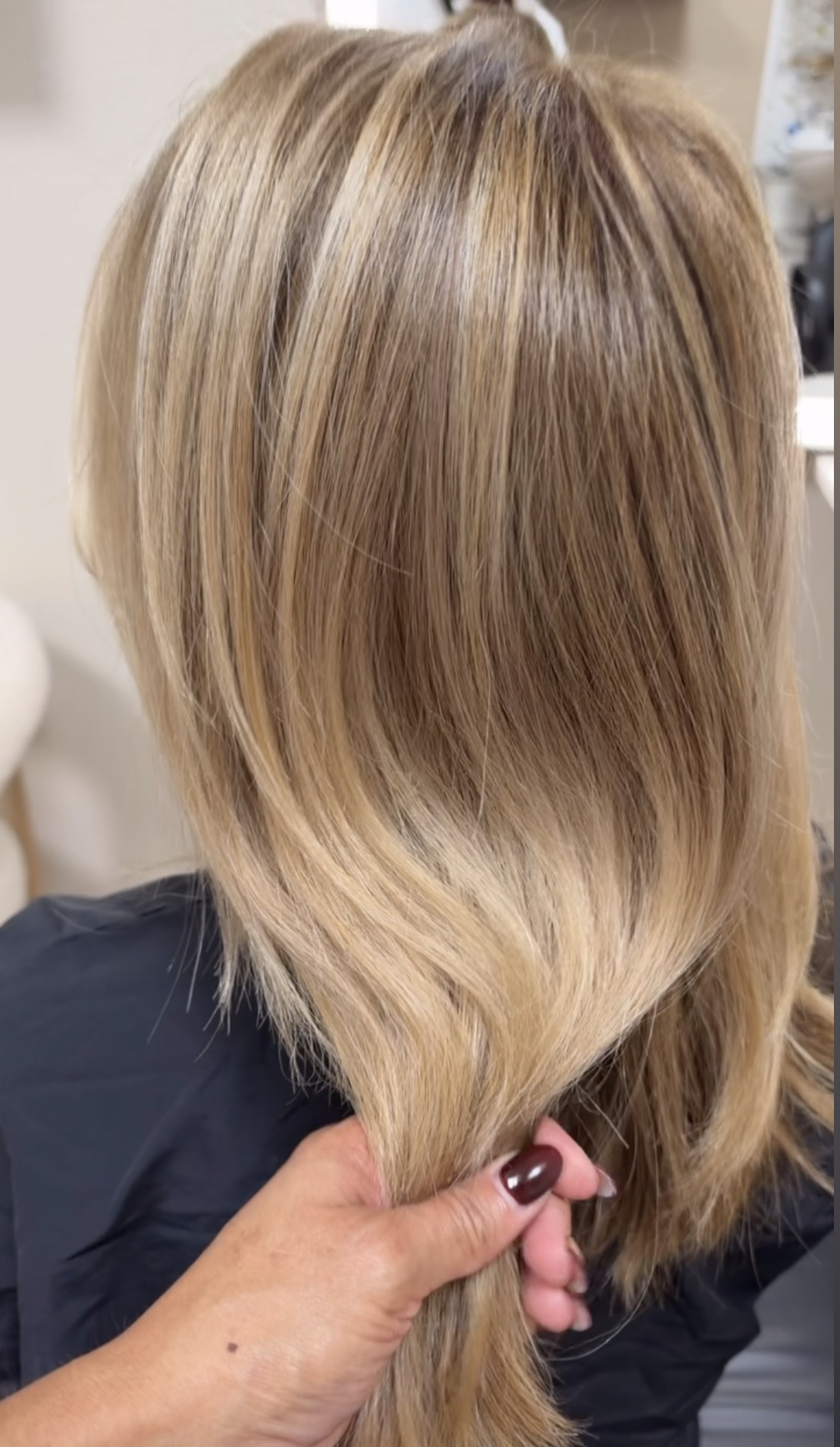
A correction from our studio: the client came in with warm tendencies and wanted cooler, brighter, and dimensional.
A scalp already stressed by a previous service can push a correction to another day. Bring snacks and a book, and plan to stay a while. Pricing varies by consultation, and current pricing lives on our service menu.
The same logic applies to a precision cut. A clean scalp and a clear read on your density let us place weight where your hair needs it. That's the same thinking we use on thick hair that needs its weight placed on purpose.
What can you do at home this week?
A plain routine fixes more than a new product does. Try these six steps for two weeks before you buy anything.
- Part and look. Grab a mirror and bright light. Part your hair in three or four places and check for redness, shine, flakes, and film. One spot won't tell you much.
- Match washing to your oil. Oily roots usually do well washed daily or every other day. Dry or coarse hair can often stretch to three or four days. If your scalp feels tight after you wash, ease off.
- Shampoo the scalp, condition the lengths. Work shampoo in at the roots only and keep conditioner off the skin. Clean roots, soft ends.
- Rinse for a full minute. Longer than feels necessary. If anything slick is left under your fingers, keep going.
- Massage with the pads of your fingers. Never your nails. About a minute is plenty, and it should feel like pressure, not scratching.
- Cut one layer of root product. Dry shampoo, spray, cream, or serum: drop one for two weeks and compare. That's how you find out which one was weighing you down.
Once a month, some people add a clarifying wash. If your hair is toned blonde, ask us first, because clarifying shampoo can strip toner.
We use and retail Evo Hair, Amika, Aluram, and Shibui. Evo is EU-certified and made without sulfates or parabens. Whether any of them belongs in your routine depends on your scalp. If the honest answer is to change how you wash, that's what we'll say.
What do people get wrong about scalp care?
Most scalp mistakes come from good intentions. Here are the four we see most:
- Washing less to protect color. Fewer washes do keep color longer. A coated scalp costs you in other ways: flat roots, dull blonde, an itch. The fix is gentler washing, not rarer washing.
- Scrubbing harder. More force doesn't mean more clean. Nails and stiff brushes irritate the skin and leave you with a scalp that's tender for days.
- Layering oil on a coated scalp. Adding a product on top of a film adds another layer. Clear the film first.
- Waiting for pain. By the time the scalp hurts, the pattern has usually run for weeks. A change you notice early is a smaller problem than one you ignore.
What happens when you bring scalp concerns to your appointment?
You get a consultation before anything else, and you get it one-on-one. Sara Carden Hair is a private studio inside Marquise Salon Suites off Highway 71 in Oak Hill. No double-booking, no assistants. When you say your scalp has been itching, the person who hears it is the person who cuts or colors your hair.
Sara is a former Bumble and bumble Network Educator and an Evo Pro Ambassador, with a full decade spent educating other stylists. That training shows in how we work. We explain what we see instead of handing you a product and a hope. Clients mention the shampoo and scalp massage in their Google reviews. The shampoo bowl is where the scalp gets its first close look. You can see recent cuts and color on our Instagram.
Here's what a visit looks like. You tell us what you've noticed and what you've changed. We part your hair and look. We say what we think it is, what we can do in the chair, and what belongs with a doctor. Then we decide on the service together.
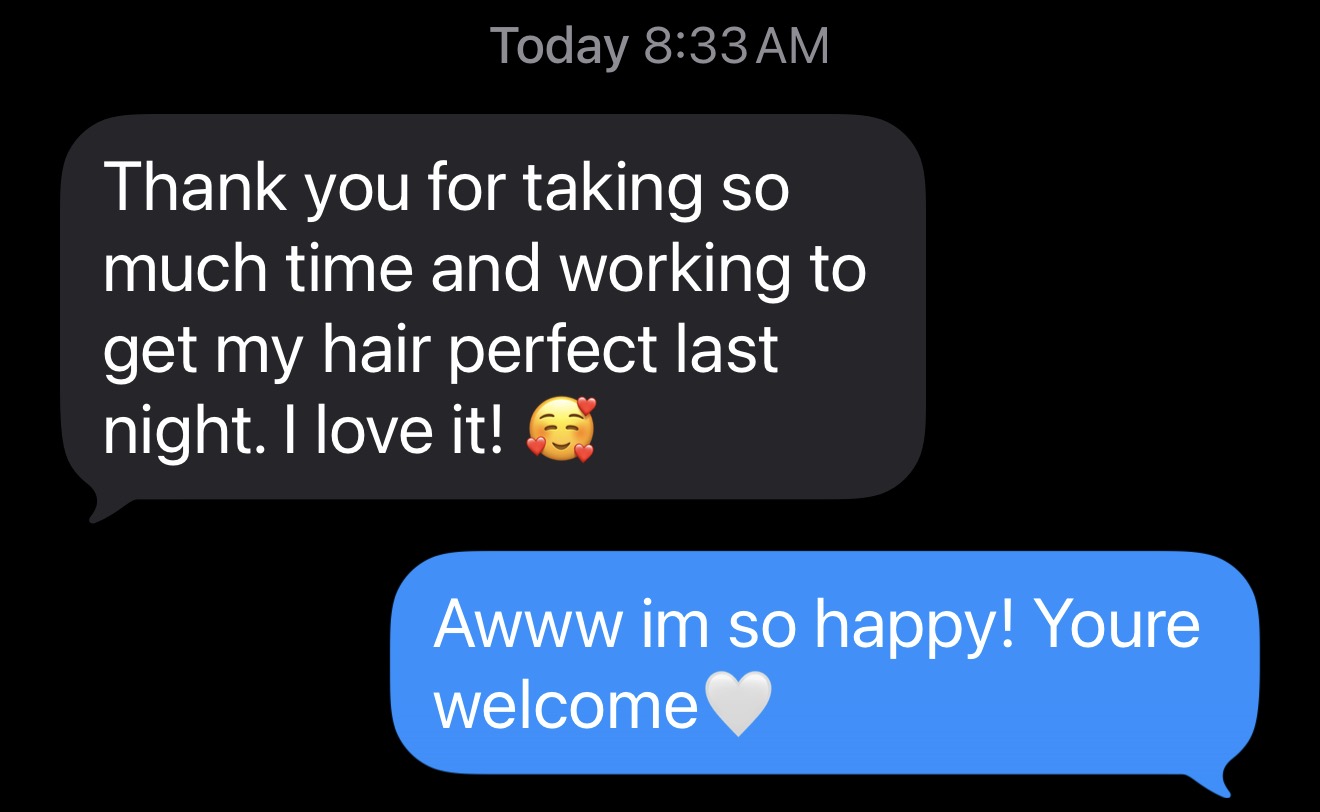
Recent work from the studio, finished after a one-on-one consultation.
Scalp Rejuvenation: the in-studio service for buildup and a stressed scalp
When buildup or a stressed scalp is the problem, the service on our menu is Scalp Rejuvenation. It starts the way every visit does. We part your hair, look closely, and tell you what we see. Then the work happens at the shampoo bowl, where buildup gets cleared. If what we see belongs with a doctor, we say so before we start.
Current pricing is on our service menu, and you can meet Sara before you book.
We see clients from Bee Cave, Lakeway, Dripping Springs, and across the Hill Country. If you're wondering whether the drive makes sense, our areas we serve page lays it out.
Frequently Asked Questions
What does an unhealthy scalp look like?
An unhealthy scalp often shows redness, a tight or shiny look, flakes, or a waxy film at the roots. The easiest time to spot it is a day or two after washing, under bright light. If the same sign is still there after two weeks of a lighter routine, get a doctor's opinion.
Why does my scalp itch right after I wash my hair?
A scalp that itches right after washing is often reacting to shampoo left on the skin, hot water, or a new product. Change one thing at a time so you know which one helped. If the itch keeps returning after those changes, mention it to a doctor.
How often should I wash my hair if my scalp gets oily fast?
Every day or every other day is a sound starting point for roots that go oily fast. Washing more often won't make oil worse, but harsh scrubbing can irritate the skin. Tell us your routine and we'll adjust it around your color.
Can product buildup make my hair look thin?
Yes. Buildup can make hair look flatter and thinner than it is. Give a lighter routine two weeks, and if your roots lift and look fuller, buildup was a big part of it. A wider part or a change in shedding is different, and that's a reason to see a doctor.
Should I see a stylist or a doctor for a flaky, itchy scalp?
Start with a stylist for buildup, dryness, and routine problems. See a doctor for patches, sores, pain, or itching that won't settle. Bring your note on what you changed recently to either one, and we'll tell you plainly which side of that line we think you're on.
Is it safe to color my hair if my scalp is sensitive?
Yes, as long as the skin is calm that day. If it's sore, red, or broken, we'll ask you to wait and rebook. Tell us about the sensitivity when you book, so we can plan the technique before you sit down.
Can tight ponytails and extensions affect my scalp?
Yes. Tight styles and pulling wefts can leave the scalp sore for days, and tenderness is the cue to loosen the style. If extensions pull, tell us so we can check the placement.
Book a Consultation
If your scalp has been sending signals, bring them to Sara Carden Hair in Austin. We'll look at it together before we touch color or a cut. Want to see the work first? Recent cuts and color are on our Instagram, linked above. Appointments are one-on-one, so tell us what's been bothering you when you book your appointment.